
母相の再構築
はじめに
材料がある結晶相から別の結晶相への相変態を生じると、元の母相の結晶粒がいくつかの異なるバリアントに変態することがあります。母相と変態生成相との関係は方位関係と呼ばれています。図1に示すような鋼のオーステナイト(γ, fcc)からフェライト(α, bcc)への変態を考えてみましょう。西山- Wassermanの関係、すなわち{111}fcc面が{110}bcc面と平行で、<11-2>fcc方向が<110>bcc面と平行であると仮定すると、母相が12種類のバリアントに変化することが予想されます(この例では6種類)。

方法
課題は、測定された変態後のバリアントから変態前の母相を再構築することです。これまでにいくつかの異なるアプローチが提案されてきました。EDAX® OIM Analysis™v8.6では、Rangerらによって提供された手順を採用しています。 低合金鋼の再構成例を図2に示します。 (EBSD測定、米国鉄鋼研究技術センター、Matt Merwin氏提供)。
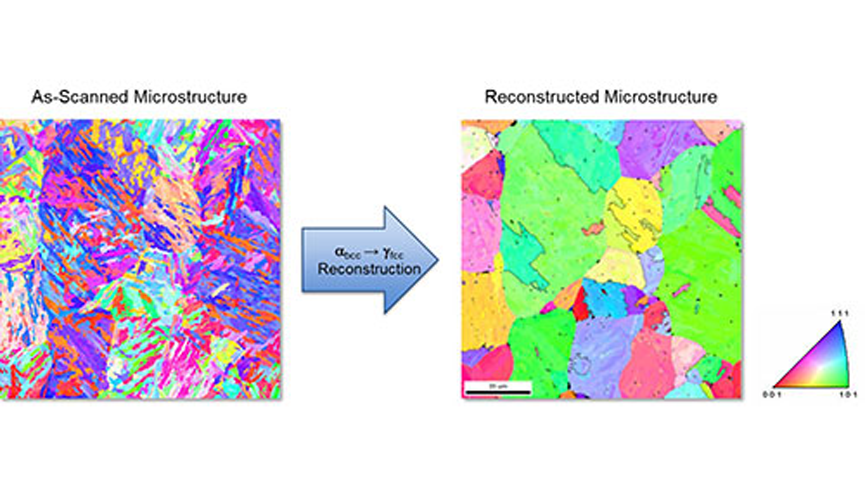
Figure 2. As-scanned and reconstructed parent grain microstructure.
この方法は、以下のような一連のステップで説明することができます。
- 測定された微細構造の各ドメイン(粒)について、ユーザーが指定した方位関係に基づいて、すべての可能性のある母相候補のリストを計算します。
- バリアントごとに最も確率の高い母相を決定し、候補リストに一致する母相を持つ隣接ドメインの割合に基づいて、信頼度の高い母相(HCP)、曖昧な母相(AP)、または信頼度の低い母相(LCP)のいずれかに分類します。この分類の例を図3に示す。
- HCPをグループ化し、隣接APに成長させる。
- LCPについてはステップ2を繰り返しますが、分析を2番目の近隣にまで拡張します。
- 2次のHCPとAPを使用して、ステップ3を繰り返します。
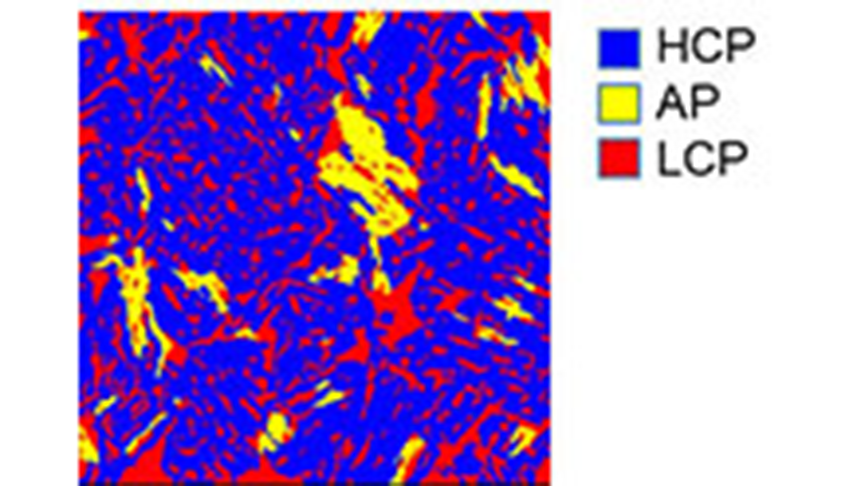
Figure 3. Classification of measured data into candidate parent orientations.
ケーススタディ: コバルトのHCP ↔ BCC相転移
六方最密充填構造(HCP)/体心立方(BCC)転移温度は422℃である。図4に2つの相の方位関係を示す。In-situ測定を行うと、部分的にしか変形していない状態で微細構造を捉えることができるため、スキャンデータとEBSDパターン自体で方位関係を直接観察することができます。

走査型電子顕微鏡の加熱ステージに試料を装填し、転移温度以上と以下の温度でEBSDその場測定を行いました。図5に転移温度以上と以下での逆極点図(IPF)と相マップを示します。このin-situ測定により、再構築された変態前の結晶構造を実験結果と比較することができ、再構築プロセスの精度を確認することができます。両者の違いは比較的マイナーでした。この再構築は相転移前の粒径を捉えるのに十分な品質を持っています。

参考文献
- Humbert, M., Wagner, F., Moustahfid, H. and Esling, C. (1995) Determination of the orientation of a parent β grain from the orientations of the inherited α plates in the phase transformation from body-centred cubic to hexagonal close packed. Journal of applied crystallography 28: 571-576.
- Glavicic, M.G., Kobryn, P.A., Bieler, T.R. and Semiatin, S.L. (2003) An automated method to determine the orientation of the high-temperature beta phase from measured EBSD data for the low-temperature alpha-phase in Ti–6Al–4V. Materials Science and Engineering: A 351: 258-264.
- Cayron, C., Artaud, B. and Briottet, L. (2006) Reconstruction of parent grains from EBSD data. Materials characterization 57: 386-401.
- Krishna, K.M., Tripathi, P., Hiwarkar, V.D., Pant, P., Samajdar, I., Srivastava, D. and Dey, G.K. (2010) Automated reconstruction of pre-transformation microstructures in zirconium. Scripta Materialia 62: 391-394.
- Germain, L., Gey, N., Mercier, R., Blaineau, P. and Humbert, M. (2012) An advanced approach to reconstructing parent orientation maps in the case of approximate orientation relations: Application to steels. Acta Materialia 60: 4551-4562.
- Miyamoto, G., Iwata, N., Takayama, N. and Furuhara, T. (2010) Mapping the parent austenite orientation reconstructed from the orientation of martensite by EBSD and its application to ausformed martensite. Acta Materialia 58: 6393-6403.
- Ranger, C., Tari, V., Farjami, S., Merwin, M.J., Germain, L. and Rollett, A. (2018) Austenite Reconstruction Elucidates Prior Grain Size Dependence of Toughness in a Low Alloy Steel. Metallurgical and Materials Transactions A 49: 4521-4535.
- Brust, A.F., Payton, E.J., Hobbs, T.J. and Niezgoda, S.R. (2019) Application of the Maximum Flow–Minimum Cut Algorithm to Segmentation and Clustering of Materials Datasets. Microscopy and Microanalysis 25: 924-941.