![]() |
![]() |
![]() |
![]() |
XuM: X-ray Microscopy in the SEM

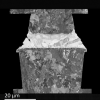
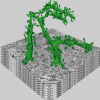
3D XuM reconstruction of a Ceramisphere™. Ceramisphere sample provided by Ceramisphere Pty Ltd. Australia. Image courtesy of Dr. S.C. Mayo, CSIRO Manufacturing & Infrastructure Technology, Clayton, Australia.
Image below the surface and add another dimension to microscopy using the SEM
- REVEAL INTERNAL STRUCTURE
- HIGH RESOLUTION
- PHASE AND ABSORPTION CONTRAST
- 3D MICRO-TOMOGRAPHY
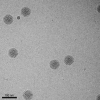
| Secondary Electron Image in SEM |
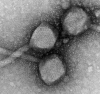
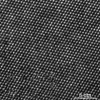
2D X-ray Image in XuM |
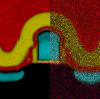
3D XuM Reconstruction |
![]() |
![]() |
![]() |
![]() |
XuM, the X-ray ultraMicroscope
The XuM is an SEM-hosted high resolution x-ray microscope which provides an internal view of the structure of samples without cross-sectioning. Providing 2D, stereo and full 3D tomographic imaging, the XuM adds the third dimension to scanning electron microscopy.
- REVEAL INTERNAL STRUCTURE: The XuM allows the scientist or engineer to investigate the inner world of their samples quickly and easily without destructive cross-sectioning or complex sample preparation. This is particularly important where the sample is valuable (and so not amenable to destructive preparation), where sectioning or invasive preparation would damage the structure or where the preparation process would be difficult, expensive or time consuming.
- SEM HOSTED: The XuM is an SEM hosted x-ray microscope. A point-like x-ray source is formed by focusing the electron beam onto a suitable target. The resultant x-rays are transmitted through the sample and projected onto a high resolution, high sensitivity x-ray camera to form an image. When not being used for XuM imaging, the target module is retracted to allow full use of the SEM in its normal imaging configuration.
- HIGH RESOLUTION: Target technology is central to the performance of the XuM. High stability targets of different geometry and composition are selected according to the imaging needs of the application. Depending upon the SEM host, XuM image resolutions of 250 nm and below are achievable.
- 3D MICROTOMOGRAPHY: 3 Dimensional solid models of samples can be reconstructed from rotational datasets using x-ray microtomography reconstruction algorithms. This allows the arrangement of internal structures to be analyzed by virtual slicing without ever having to physically dissect the sample.
- X-RAY PHASE AND ABSORPTION CONTRAST: X-ray images generated using the XuM contain both absorption and phase contrast revealing fine edge structure and edge definition in a wide range of sample materials. Phase contrast is a phenomenon that exploits the wave properties of x-rays. It arises from the refraction (rather than absorption) of x-rays as they interact with the sample and is strongest at sharp edges, boundaries and cracks. Phase contrast can occur in samples that present very little variation in density and hence show poor absorption contrast. This allows samples such as polymers, low density composites and biological specimens to be imaged in detail using the XuM.
To download the XuM datasheet click here.
To download an XuM application article published in Microscopy Today (Nov 2008) click here.
For complete information on the XuM, please contact your local Gatan Sales office.