SEM Products

MonoCL4

MonoCL4 is the next generation in the world-leading family of cathodoluminescence (CL) systems from Gatan. It is available in 4 configurations to suit the widest range of applications and requirements: MonoCL4, MonoCL4 Swift, MonoCL4 Plus and MonoCL4 Elite.

The MonoCL4 family are all compatible with conventional, low vacuum or field emission SEMs, combined FIB/SEMs and ion microscopes.  Special versions are available for microprobes, (S)TEMs or UHV chambers.  There is also full compatibility with Gatan’s range of nitrogen cooling stages and helium cooling stages for enhancing the CL signal and increasing spectral discrimination. Gatan’s quantitative EBIC system, SmartEBIC can also share the MonoCL4 platform.

The MonoCL design continues to provide unrivalled sensitivity by maximising light collection efficiency and using direct optical coupling through a chamber-mounted monochromator to high efficiency detectors.  In this way losses are minimised and maximum sensitivity is achieved across a broad spectral range allowing:

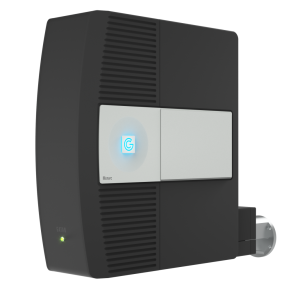
 MonoCL4 Cathodoluminescence  (CL) system for SEM and TEM

  • Low injection conditions for high spatial resolution, avoiding non-equilibrium conditions and minimising beam-induced artefacts
  • Narrow band pass operation for high spectral resolution and monochromatic imaging
  • Shorter acquisition times for enhanced productivity
  • CL applications for many specimens, even from SEMs with limited beam current
  • CL from restricted generation volumes e.g. thin films, nanowires, nanoparticles and TEM specimens


MonoCL4

The MonoCL4 family of products provides a range of high performance CL solutions individually engineered to your microscopy needs. The core MonoCL4 product offers:
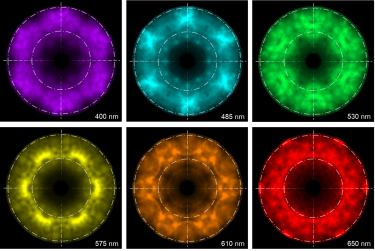
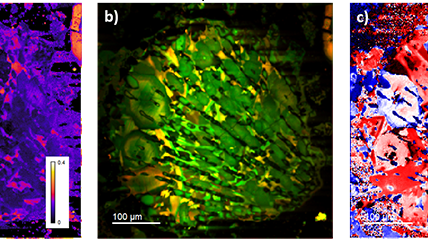
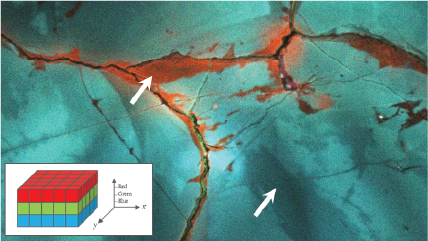
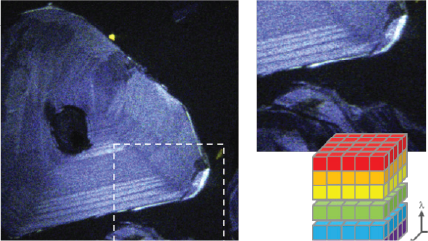
Metamorphic re-crystallisation of polycrystalline diamond produced using the MonoCL4 Cathodoluminescence (CL) system. Dr E. Vicenzi, Smithsonian Institution, Washington D.C.
  • Panchromatic and monochromatic imaging with high spatial and spectral resolution
  • ‘Point and click’ selection of spectroscopy, imaging and mapping modes
  • Shortpass, longpass and bandpass imaging using filter options for increased flexibility
  • Detector and diffraction grating options optimised for your application in the ultra violet, visible and infra red wavelength ranges
  • Computer and/or manual control of detector settings
  • Factory recorded spectral response files
    Enhanced sensitivity in the ultra violet and infra red wavelengths
  • UV optimised option, allowing analysis to wavelengths below 200 nm
  • Time evolved signal monitoring
  • New design and software features make the interchange of gratings easier than ever whilst maintaining spectral calibration
  • The modular structure allows convenient and cost effective upgrade paths to the premium packages or to extend the useable wavelength range using additional detectors.

MonoCL4 Swift


MonoCL4 Swift is as MonoCL4 but includes an additional array detector enabling

  • Rapid ‘parallel’ spectral acquisition for superior productivity
  • Crucial to obtaining results from beam sensitive specimens

MonoCL4 Plus


MonoCL4 Plus is as MonoCL4 but offers even greater sensitivity and flexibility. It includes a cooled, high sensitivity PMT and the high performance DigiScan II™ digital beam control system, for high-bit image acquisition, processing and analysis, enhancing SEM imaging performance and extending applications.

  • Simultaneous acquisition of multiple imaging and mapping inputs
  • Wide flexibility of pixel density and dwell times – key for many CL applications
  • Quantitative pulse mapping (complements standard analogue imaging)
  • Linescan mapping function
  • Multiple image overlay facility with drift correction

MonoCL4 Elite


MonoCL4 Elite is the ultimate CL package, including all of the specification of MonoCL4 and combining the speed of MonoCL4 Swift with the sensitivity of MonoCL4 Plus.  It also incorporates advanced analysis options using Gatan’s industry leading spectrum-imaging (SI) software.
Allows bandpass images to be extracted as a post-processing step.
  • MLLS fitting of data using reference spectra to produce fit-coefficient maps
  • Gaussian curves can be fitted to spectra providing amplitude, peak-shift & -width mapping. Useful for mapping changes in alloy composition and stress mapping in semiconductor and ceramic materials
  • Sub-pixel scanning for improved statistical confidence
  • Stage mapping option for extended field of view
  • Simultaneous SI acquisition of other signals available e.g. EDS or EELS